|
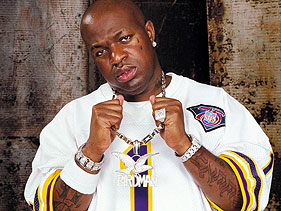
Birdman Arrested, Police Find Drugs and Firearms During Traffic Stop, and black crimeCompiled by Lewis Loflin Rapper and Cash Money Records CEO, Bryan "Baby" Williams, better known as Birdman was arrested along with 15 others and charged with possession of marijuana Tuesday, November 27th, after the RV they were riding in was pulled over by police for making an improper lane change around 4:10 pm. According to the Associated Press, Traffic on Interstate 81 was backed up for miles after being shut down to one lane while the suspects were handcuffed and the tour bus was searched. Kingsport Police Cpl. Tim Horne says he stopped the vehicle after it forced a tractor trailer into an emergency lane on the Interstate. According to reports, Horne found a pound of marijuana in a trash can in the kitchenette after obtaining consent to search the vehicle due to the strong [marijuana] smell. An assault rifle, a handgun and a magazine for a .45-caliber handgun were found on the RV, however, no weapons charges have been filed. Another report:KINGSPORT: Rapper Bryan "Birdman" Williams (age 38), his wife Brittany (18), his brother Ronald (43), and 13 assorted cohorts and friends were released on bond early Wednesday. The day before they were busted by Kingsport, Tennessee police for possession of marijuana. Bryan and Ronald founded Cash Money Records in 1991, a label that is distributed, marketed, and promoted by Universal Records. They were in a large RV, Bryan Williams was released on $1,500 bond around 1:30 a.m. along and the others. Birdman and his gang left the Kingsport Justice Center and drove off in rented cars Wednesday morning. Their next court date is March 18, according to the Kingsport General Sessions Court Clerk's Office. Police said they stopped the RV after they saw it force a tractor-trailer into the emergency lane on Interstate 81. Cpl. Tim Horne said he could smell marijuana from inside the rented RV and found about a pound of marijuana in a trash can. One of the suspects, 24-year-old Brandon Thursten of Miami, had a 9mm handgun tucked in his waistband and police said they also found a second gun. No weapons charges have been filed, but the Bureau of Alcohol, Tobacco and Firearms is assisting in the investigation. According to reports from The Kingsport Times-News several people in the RV were carrying about $1,000 cash and some had as much as $5,000 on hand. The money (approximately $12,000 to $15,000) won't be seized unless police detect the smell of marijuana on it. The driver told police the group was traveling from New Orleans to New York for a BET shoot. Ref. Associated Press November 28, 2007 Yet to quote Knoxnews.com with some more details, Boswell told Horne he was taking the group of Cash Money Records representatives from New Orleans to a BET shoot in New York. Their plans were derailed when Horne obtained consent to search the vehicle after smelling burnt and raw marijuana inside the vehicle. During that search, Kingsport police found about a pound of marijuana in a trash can in the kitchenette, officers said. Note that as of June 2008 there is no record "Birdman" ever came back to court in March.

More Crime in Kingsport: Three black men murder 4th black manIt's sad that black people are often the main victims of black crime. While wealthy white liberals from the gated communities yell "racism" every time police bring down a black criminal, they care nothing about the thousands of decent black people that suffer. The high black crime also stigmatizes the vast majority of decent black people. Three black men were arraigned on first-degree murder charges will then be bound over to a Sullivan County grand jury. They're charged death of another black man, Derick Kesse, 19, who was found bound April 20 in his apartment. Police believe Kesse was killed during a robbery in which an undisclosed amount of money was taken from a safe in his apartment. Officials believed he died from asphyxiation. On April 21, police released the identities of two Kingsport men they were seeking on charges of first-degree murder, especially aggravated robbery and especially aggravated kidnapping. Those men were Ashton J. Philip, 19, Aldean K. Bowman, 18, and Patrick Devin Camp, 18, of Gate City, Va. They remain jailed on $500,000 bond each. Ref. Kingsport Times-News 4/30/08 Equal opportunity ArrestsThe Times-News reports "Kingsport police seize LSD, heroin, cocaine during I-81 traffic stop." All four were white men. A traffic stop by Kingsport police on Interstate 81 Thursday led to the arrest of four New York residents allegedly found in possession of sugar cubes laced with LSD and an assortment of other drugs...officers conducted a traffic stop on a recreational vehicle after the driver failed to move over for an emergency vehicle stopped on the side of the interstate...in the vehicle were "a vast amount" of baggies...and $3,000 in cash, police said. Date: June 14, 2008
Heather Mac Donald is a contributing editor of City Journal and the John M. Olin Fellow at the Manhattan Institute. Her latest book, coauthored with Victor Davis Hanson and Steven Malanga, is The Immigration Solution. Extracts from: Is the Criminal-Justice System Racist? Spring 2008 No: the high percentage of blacks behind bars reflects crime rates, not bigotry. The race industry and its elite enablers take it as self-evident that high black incarceration rates result from discrimination. At a presidential primary debate this Martin Luther King Day, for instance, Senator Barack Obama charged that blacks and whites "are arrested at very different rates, are convicted at very different rates, [and] receive very different sentences...for the same crime." Not to be outdone, Senator Hillary Clinton promptly denounced the "disgrace of a criminal-justice system that incarcerates so many more African-Americans proportionately than whites..." About one in 33 black men was in prison in 2006, compared with one in 205 white men and one in 79 Hispanic men. Eleven percent of all black males between the ages of 20 and 34 are in prison or jail. The dramatic rise in the prison and jail population over the last three decades...has only amplified the racial accusations against the criminal-justice system. The favorite culprits for high black prison rates include a biased legal system, draconian drug enforcement, and even prison itself. None of these explanations stands up to scrutiny. The black incarceration rate is overwhelmingly a function of black crime...From 1976 to 2005, blacks committed over 52 percent of all murders in America. In 2006, the black arrest rate for most crimes was two to nearly three times blacks' representation in the population. Blacks constituted 39.3 percent of all violent-crime arrests, including 56.3 percent of all robbery and 34.5 percent of all aggravated-assault arrests, and 29.4 percent of all property-crime arrests... Moving up the enforcement chain, the campaign against the criminal-justice system next claims that prosecutors overcharge and judges oversentence blacks. Obama describes this alleged post arrest treatment as "Scooter Libby justice for some and Jena justice for others." Jena, Louisiana, of course, was where a D.A. initially lodged second-degree murder charges against black students who, in December 2006, slammed a white student's head against a concrete beam, knocking him unconscious, and then stomped and kicked him in the head while he was down. As Charlotte Allen has brilliantly chronicled in The Weekly Standard, a local civil rights activist crafted a narrative linking the attack to an unrelated incident months earlier, in which three white students hung two nooses from a schoolyard tree - a display that may or may not have been intended as a racial provocation. This entrepreneur then embellished the tale with other alleged instances of redneck racism - above all, the initial attempted-murder charges. An enthusiastic national press responded to the bait exactly as intended, transforming the "Jena Six" into victims rather than perpetrators... See Liberal Racism and the so-called "Jena 6" ...Some criminologists replace statistics with High Theory in their search for racism. The criminal-justice system does treat individual suspects and criminals equally, they concede. But the problem is how society defines crime and criminals. Crime is a social construction designed to marginalize minorities, these theorists argue. A liberal use of scare quotes is virtually mandatory in such discussions, to signal one's distance from primitive notions like "law-abiding" and "dangerous." Arguably, vice crimes are partly definitional (though even there, the law enforcement system focuses on them to the extent that they harm communities). But the social constructivists are talking about all crime, and it's hard to see how one could "socially reconstruct" assault or robbery so as to convince victims that they haven't been injured. Unfair drug policies are an equally popular explanation for black incarceration rates. Legions of pundits, activists, and academics charge that the war on drugs is a war on minorities - a de facto war at best, an intentional one at worst. Playing a starring role in this conceit are federal crack penalties, the source of the greatest amount of misinformation in the race and incarceration debate. Crack is a smokeable and highly addictive cocaine concentrate, created by cooking powder cocaine until it hardens into pellets called "rocks." Crack produces a faster - and more potent - high than powder cocaine, and it's easier to use, since smoking avoids the unpleasantness of needles and is more efficient than snorting. Under the 1986 federal Anti-Drug Abuse Act, getting caught with five grams of crack carries a mandatory minimum five-year sentence in federal court; to trigger the same five-year minimum, powder-cocaine traffickers would have to get caught with 500 grams. On average, federal crack sentences are three to six times longer than powder sentences for equivalent amounts... My comment: crack negatively impacts blacks far more than whites. So releasing thousands of crack dealers under claims of racism will by far hurt black people. Next, critics blame drug enforcement for rising racial disparities in prison. Again, the facts say otherwise. In 2006, blacks were 37.5 percent of the 1,274,600 state prisoners. If you remove drug prisoners from that population, the percentage of black prisoners drops to 37 percent - half of a percentage point, hardly a significant difference. (No criminologist, to the best of my knowledge, has ever performed this exercise.) The rise of drug cases in the criminal-justice system has been dramatic, it's important to acknowledge. In 1979, drug offenders were 6.4 percent of the state prison population; in 2004, they were 20 percent. Even so, violent and property offenders continue to dominate the ranks: in 2004, 52 percent of state prisoners were serving time for violence and 21 percent for property crimes, for a combined total over three and a half times that of state drug offenders. In federal prisons, drug offenders went from 25 percent of all federal inmates in 1980 to 47.6 percent of all federal inmates in 2006. Drug-war opponents focus almost exclusively on federal, as opposed to state, prisons because the proportion of drug offenders is highest there. But the federal system held just 12.3 percent of the nation's prisoners in 2006. So much for the claim that blacks are disproportionately imprisoned because of the war on drugs. But a final, even more audacious, argument maintains that incarceration itself, not criminals, causes crime in black neighborhoods. Because blacks have the highest prison rate, this argument holds, incarceration constitutes an unjust and disproportionate burden on them. This idea has gained wide currency in the academic world and in anti-incarceration think tanks. Columbia University law professor Jeffrey Fagan offered a representative version of the theory in a 2003 law review article coauthored with two public health researchers. Sending black males to prison "weakens the general social control of children and especially adolescents," Fagan writes. Incarceration increases the number of single-parent households. With adult males missing from their neighborhoods, boys will be more likely to get involved in crime, since they lack proper supervision. The net result: "Incarceration begets more incarceration [in] a vicious cycle..." ...In the overwhelming majority of cases, whatever the race of the convicted, prison remains what it has always been: a lifetime achievement award for persistence in criminal offending. Absent recidivism or a violent crime, the criminal-justice system will do everything it can to keep you out of the state or federal slammer. It can be disconcerting for the average law-abiding citizen to hear a prosecutor's typology of the crime universe: most thefts, for example, are considered "nonserious crimes" that do not merit prison sentences, unless they concern a huge amount of money or took place in the victim's presence. Steal an unoccupied car or burgle an unoccupied home and you'll probably get probation; hijack a car from a driver or stick up a pedestrian, however, and you'll probably go to prison. Columbia University law professor Dan Richman had a chance to test the "harmless offenders in prison" claim as chair of New York City's Local Conditional Release Commission. Richman studied the criminal profile of Rikers jail inmates in late 2004. Jails are supposed to be where the most "innocuous" lawbreakers end up - those with misdemeanor convictions or sentences of less than a year. "It struck me how serious the offenders were," he says. "I'd come from the academy, where there's persuasive writing about over-incarceration. I had assumed there would be mostly first-time offenders in jail, but it wasn't true." About 40 percent of the inmates had prior felony convictions, Richman discovered, and the inmates' most recent offenses, which had put them in jail this time around, were usually serious. People in for assault would have pleaded down from attempted manslaughter; possession pleaded down from distribution. "These weren't people who were there by accident," says Richman. One can also test the theory that locking away offenders doesn't lower crime by seeing what prisoners do when they get out. The Bureau of Justice Statistics studied the postprison careers of over 272,000 state prisoners released in 1994. Within three years, 67.5 percent of the group had been rearrested for 744,000 new felonies and serious misdemeanors. How many additional crimes they committed during those three years before getting arrested is unknown; estimates of the number of crimes that a typical unapprehended criminal commits per year range from zero to several hundred. And the ex-cons' post-release crime spree seems not to have resulted from the negative effects of prison itself, since convicts who spent the longest time behind bars had significantly lower rearrest rates than others. Not all criminologists and law professors dispute that prison lowers crime. University of Chicago economist Steve Levitt hypothesized in 1996 that had incarceration rates not risen sharply from 1971 to 1993, violent crime would have been 70 percent higher and property crime almost 50 percent higher. More typical estimates attribute 10 to 25 percent of the 1990s crime drop to incarceration. And Berkeley law professor Franklin Zimring rejected the diminishing-returns argument against incarceration in his 2007 book The Great American Crime Decline. The fact that crime started dropping consistently only at the end of the decades-long prison buildup makes perfect sense, he argued, since that's when the greatest number of criminals were off the streets. A final note from me: press reports in 2008 say crime is way down from 1990. Wonder why?
[ Homepage ] [ Deism ] [ Christianity in America ] [ Debunking Islam ] [ Killing Children ] [ George Bush Defends Saudi Terrorism ] [ Islamic Fascism ] Visitors since |